Every heartbeat is a universe of possibilities
Title: Shantaram
Author: Gregory David Roberts (often referred to by fans as GDR)
Original Publication Date: 2003
Genre: Epic Novel / Semi-autobiographical Fiction / Adventure / Crime
Setting: Bombay (Mumbai), India,
Timeline: Primarily the 1980s.
Last year, I went to India for my friend Nivedita’s wedding. I was very lucky to attend not only an Indian wedding, but the most beautiful Indian wedding. It was my second time in the South Asian country; the first time was some 8 years ago with a backpack, when I was younger, more adventurous and would do anything to squeeze a few euros into a short trip. Some of my best friends are from there, and I’ve been repeatedly told either that I’m a bit Indian inside or that I could have been Indian in a past life.
Shantaram was on my reading list for some time, but I kept it for when I would visit Mumbai, because I wanted to feel the city as the Roberts would describe it. The book is indeed recommended in the Lonely Planet travel guide for India, as an inspiration. Of course, the India I saw was far from the slum life and gangster characters described by Roberts, but I could still draw some parallels to his telling. I one hundred percent relate to him in the first chapters, where, as a westerner, he lands in Mumbai and describes the heat, the crowd and the taste of spice in the air. Whether you are a fleeing prisoner as the author (Lin as he makes himself called in the book), or a young student on a Summer break vacation, the arrival in India might feel overwhelming. Indeed, I had lived across three continents with different levels of privilege, and I admit I wasn’t ready for what I would see on the very first day. On my first trip, I arrived in New Delhi and took an early-morning train directly to Rajasthan. Just from the train, I was traveling 1st Class A/C, I passed by the suburbs and saw a face of poverty that stayed engraved in my memory.
Then, adaptation went more smoothly. Traveling to the countryside and smaller cities, taking the time to talk to people, I’ve learned to balance the rush of taking a train that fits some two hundred people in a wagon (of course, with no doors or windows) with the lax concept of time. On my first day, my hostel host offered a lassi at lunchtime. The lassi came, but past midnight. I learned that there is no point in trying to rush Indians into getting you something; things will be done (if they do) when they consider it’s time to do them. In the villages, I also saw honesty and humbleness in the purest of forms. Especially in the places where not many foreign tourists go, such as Kajuraho, I felt people showed genuine interest in life in the West and did their best so that I could take a piece of them with me. Both times I visited India, I took a cooking class (or Indian cooking for white people, as my friends call it), and I can tell that no matter how many temples you visit, you don’t learn as much as visiting a local home, a local kitchen, cooking with an auntie and asking about how they live, how people earn their living, about this and that religious groups and how they share the space, and how they see the present and future of their country.
As Lin describes, compared to the West, India is a place where personal space is very limited. The country is big, but there are a lot of people to fit in, so sooner or later, you learn to make concessions. My friend Sushil told me that even though he wasn’t necessarily poor, he didn’t know privacy until he moved to Germany. That if he were to ask for some space of time alone, the answer would be Do you think you are a king here? And that extends to the tightly packed houses, where you can always feel some activity, inside and outside. The constant honking, the Muslim and Hindu calls for prayers and celebrations, the motorcycles and rickshaws rushing through the streets, the spice roasting with such a strong scent that it makes you cry, and the frying oil. Because India never sleeps. It’s a country where nothing is given, and if one himself doesn’t make ends meet, no one will.
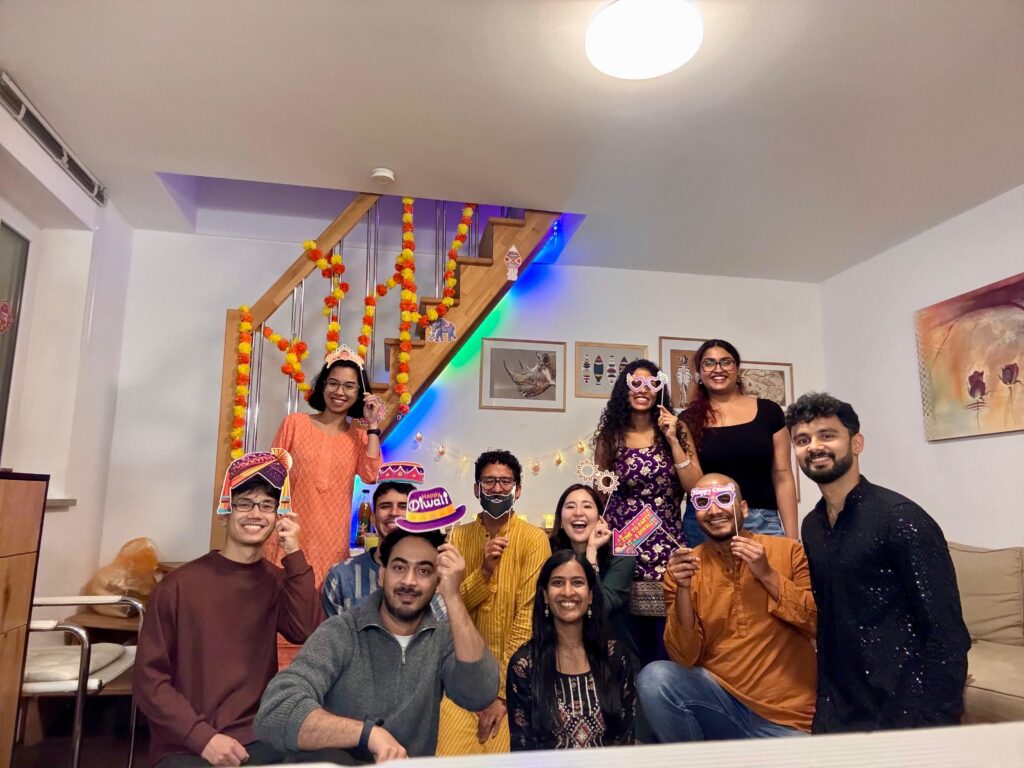
My first contact with Indian culture (let me use the term, even though in such a diverse country any generalization feels wrong) was not in India but during my stay in Malaysia. Probably, it was then that I learned that I’m a bit Indian. I celebrated my first Diwali (or Deepavali) with an Indian family I stayed with for a week. I remember having to wash some clothes on my arrival, and they made me do it myself. By hand. For the next batch, they told me to give it to the person who worked at their house. Maybe it was a test, or maybe a misunderstanding. Test or not, I passed it. And just like Lin, who got the Marathi name of Shantaram (Peaceful Man), I got the Tamil name of Iniyan (Kind Person). Diwali marked me so much that I still celebrate it almost every year. Something I did every day that week was approach the little shrine we had at home, put the dot on my forehead, and say a little prayer. For me, it meant being grateful for something that passed and asking for a good day. It only takes one minute a day, and now I think I should keep practicing it.
After the initial impressions of India, Shantaram quickly develops into a gangster story, with crime, prostitutes, drugs, fights, and Lin embracing life in a slum while hiding from the law. The story feels genuine, and apparently, some of the characters did exist, but it’s difficult to draw the line between autobiography and fiction. Even though I’m disappointed that not everything that is told actually happened, for a long time it was a book I didn’t want to leave because, in the way it’s written, it feels like you are making Lin company. It’s written in a way that you can also love, feel sorry and hate the characters.
Personally, since I stopped traveling and started focusing on my career as a scientist, I rarely meet people who reflect and can teach me about other people and their behavior. Shantaram has some very intelligent characters. The ones that have what we now call emotional intelligence, and the book is full of quotes worth remembering (the original idea of this post was to collect them). I asked Gemini to collect some of them:
On Love
Love is the opposite of power. That’s why we fear it so much.
On Men
Men reveal their character in the way they treat women who can do nothing for them.
On Secrecy
A set of secrets is what we are. We’re all made of the things we’ll never tell.
On Happiness
Happiness is a myth. It was invented by the people who want you to buy things.
On Friendship
The only thing more dangerous than having an enemy is having a friend you can’t trust.
On Suffering
Suffering is the only thing that makes us realize we are alive. It’s the only thing that tells us we’re not dreaming.
On the Concept of Time
Indian time is a psychological construct. If you’re in a hurry, it expands to frustrate you. If you’re enjoying yourself, it disappears.
On Fate and Identity
Fate gives all of us three teachers, three friends, three enemies, and three great loves in our lives. But these twelve are always disguised, and we can never know which one is which until we’ve loved them, left them, or fought them.
On the Soul of the Country
India is the only country in the world where a man can be a saint and a sinner at the same time, and nobody thinks anything of it.
What I wish I could contribute to change…
As much as I love India and my Indian friends, I have to admit that both times I visited, I was somewhat happy to be back to the silence, the cleanliness of the streets, not having to worry about food poisoning every time I ate something… I’ve met people who have traveled across India for extended periods (six months or longer), and I believe you need that amount of time to really get to know the country. However, as I said, it can be a lot to take in, and I’m also happy to have experienced it in parts. I personally like to let my impressions sit before forming a clear idea or opinion.
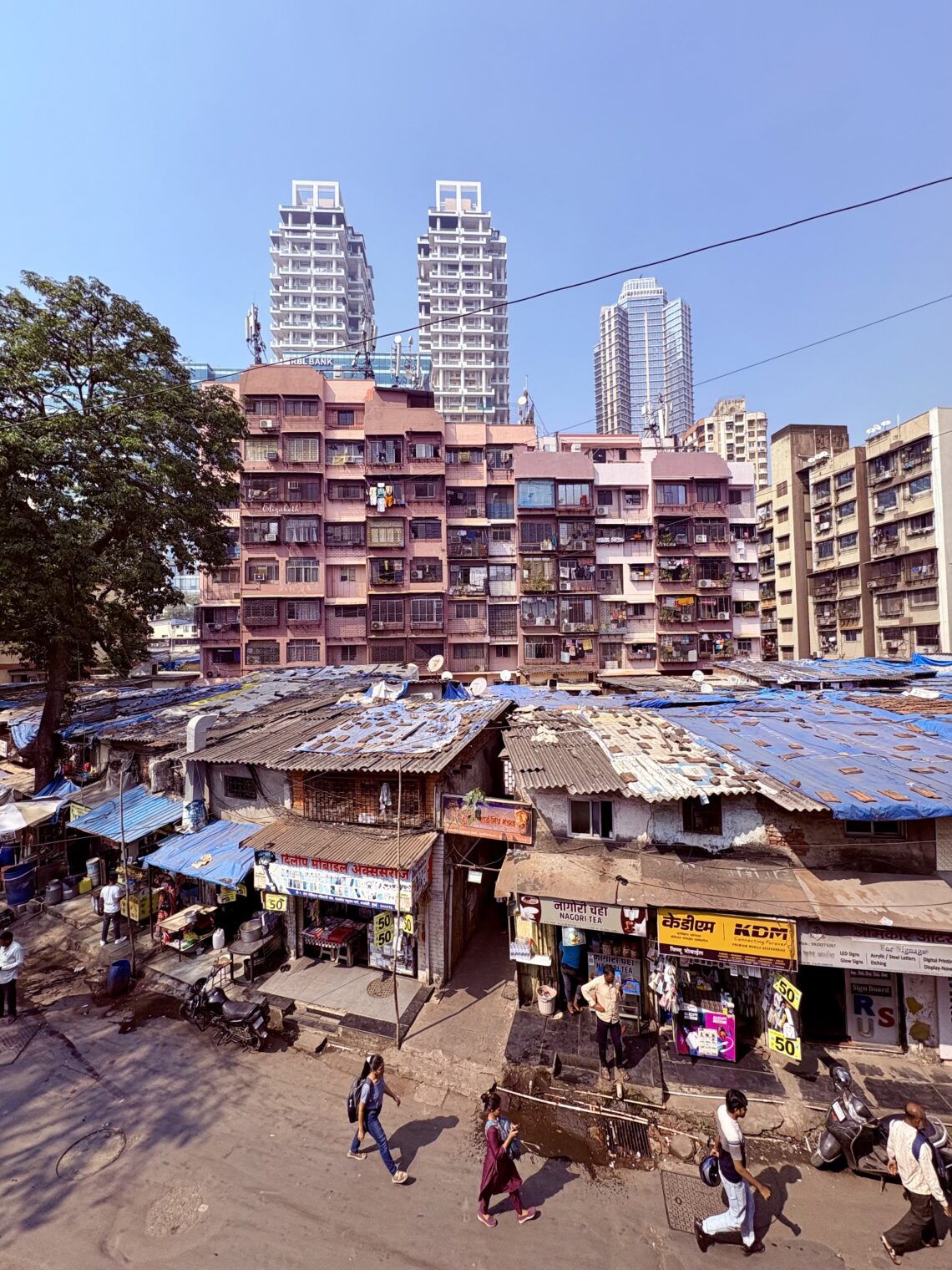
Recently, I was thinking that, seen from Germany, India can feel like a rather dystopian place. Imagine this: If you stand in the centre of Mumbai and take a picture, the composition might include the richest and the poorest homes, rats as big as cats, rickshaws, beggars, piles of trash, an auntie making samosas to sell while squatting next to her stove on the floor, street dogs, a wealthy person wearing the finest sari walking past a group of naked children… and of course, a few random cows. Yet this is the reality people there know, and it is also what shapes the resilience, resourcefulness, spontaneity, and temperament of the society.
Inequality in India is very obvious. There are really two different realities, with very little overlap (if any). Sometimes it is strikingly visible, and at other times it is partially hidden. A local pointed out to us that in a lower‑income neighborhood, only every other street lamp was lit to save energy. This did not happen in Bandra, the upper‑class neighborhood where we stayed. Besides inequality, another thing that shocked me was the amount of trash and pollution. I can honestly say I would never have fully grasped the scale of plastic waste and polluted waters if I hadn’t visited India. Just imagine piles and piles of plastic, filling landfills, floating on the rivers, the sewage, the beaches… The water isn’t always safe to drink, and often, if not stagnant, you can see it flow with all kinds of colors and smells. But the problem is not personal; it’s partly systemic (in both management and lifestyle) and a matter of resources. It can’t be addressed as long as one reality is thought not to care, and the other is too busy surviving by the day to care.
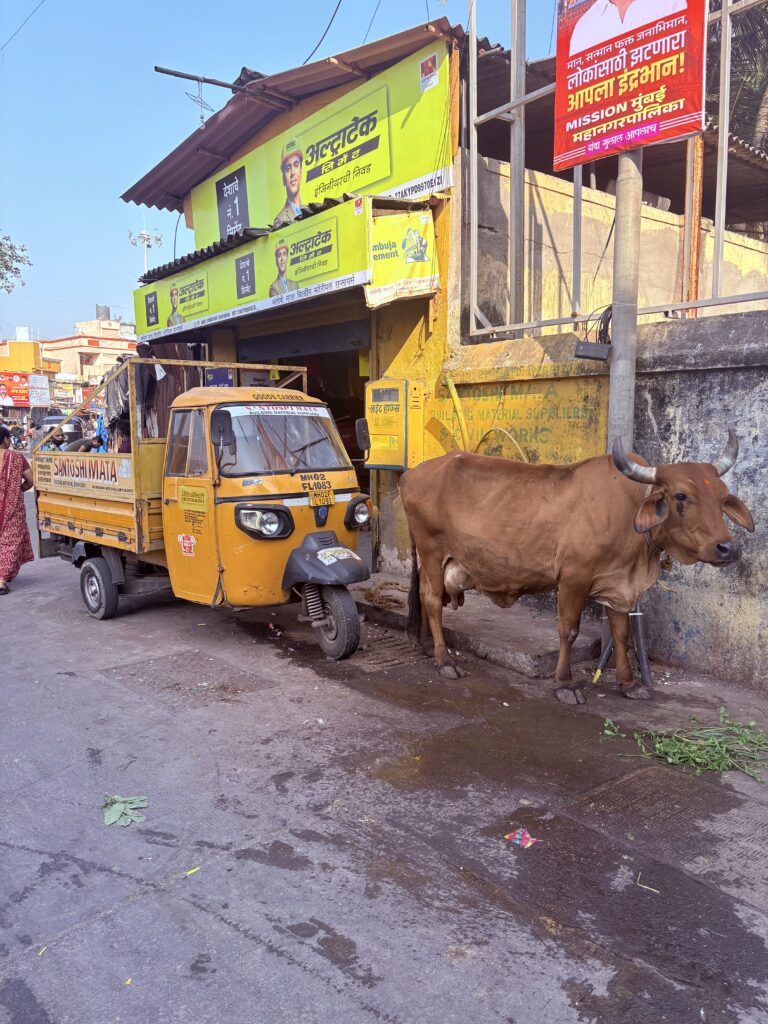
One observation I made while in India is the fact that the country is indeed full of cows. Some seemed to have owners, but many were just strays. It shocked me seeing cows in the middle of Delhi and Mumbai, because I associate them with the mountains and grasslands. Especially if they are supposed to be considered sacred and cared for. Even more disturbing was walking through a loud party street in Goa and seeing cows wandering, disoriented or simply feeding and sleeping on garbage piles. It really seemed that everyone was okay with it. After my return, I compared with the deer shrines and sanctuaries I had visited in Japan, and I thought the cows deserved such a place. I did some research on the situation: While in Japan, deer are meant to live in a sanctuary or the forest because they are divine creatures, in India, cows are like members of the family that help work the fields and provide milk. Now, what we see is a clash between tradition and the current reality of a lack of resources to provide the cows with space, proper food and a dignified life after stopping being productive (e.g., giving milk). There are indeed stray-cow sanctuaries, called Goshala, but they are not equipped to handle the number of stray cows in the country.
There is one last thing I’d like to highlight because it really shocked me, and I’d like people to be aware of it. While visiting Munar (in the state of Kerala), we hired a tour that included, among other things, a visit to an elephant park. In my mind, all elephant parks were sanctuaries with rescued animals. I had been to one. This one was exactly the opposite: the tourists would just go for a ride on top of the animal, sometimes three or four people, and even though it was clearly forbidden to take pictures, we could see that the animals were hit with sticks on their knees and even burnt with burning coal. So, don’t give animal welfare for granted.